


Made whole in a unit I never held
FTX is about to pay my claim, nearly three years after the collapse: in dollars, at the price of ETH on the day it went bankrupt. A Sui protocol exploited this month is doing the same. Why a recovery of 100% or more in dollars is a short position on the coin you held, with the arithmetic.
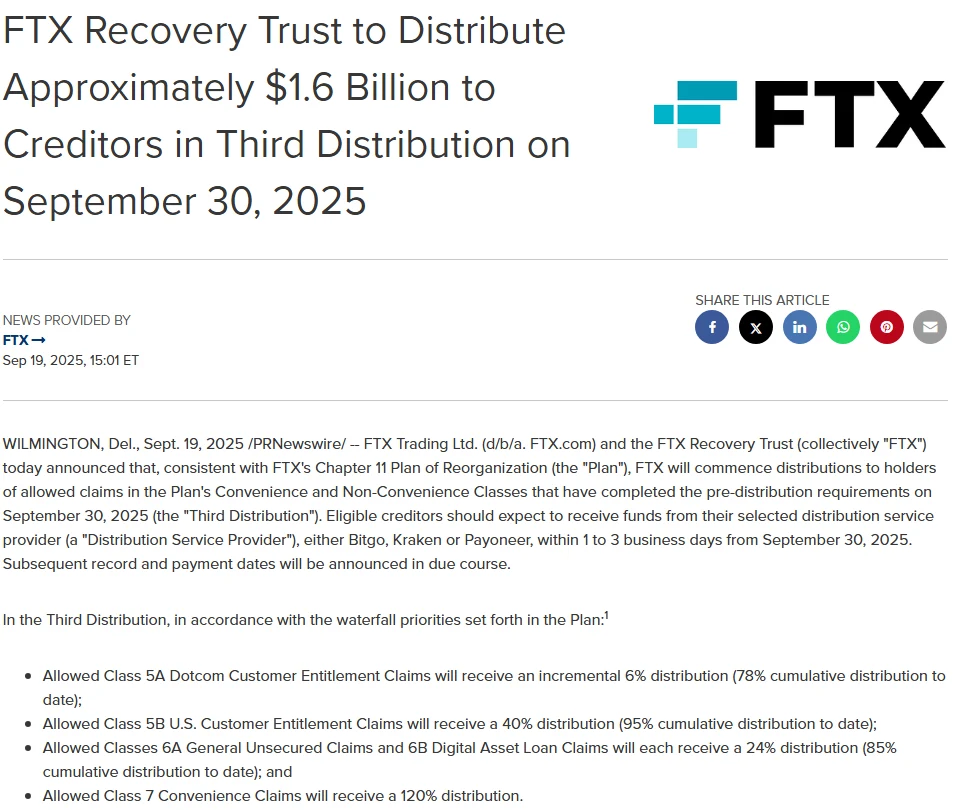
Overnight, the FTX Recovery Trust announced its third distribution to creditors, to be paid on 30 September, and my claim is in it [1]. When the exchange froze in November 2022, I had a small amount of staked ETH on it, which I wrote off at the time. Getting money back nearly three years later should feel like good news. Mostly it feels like a lesson in units.
What “made whole” means
A bankruptcy has to turn every creditor’s claim into one currency, so that the claims can be ranked and paid. FTX’s estate did this in US dollars, at the prices of 11 November 2022, the day it filed for Chapter 11. The court-approved conversion table has a price for every token the exchange held: $16,871.63 for a bitcoin, $16.25 for a SOL and $1,258.84 for an ETH. What I held was Lido’s staked ETH, stETH, priced at $1,252.46 [2]. That was close to the lowest price of the whole cycle.

By the standards of a bankruptcy, the estate has done remarkably well. The plan promised customers the petition-date value of their claims, “on a dollarized basis”, plus interest at nine percent a year [3]. Small claims, up to $50,000, form a “convenience class” that is paid once, in full: 120% of the claim, which is the 100% plus the interest [1]. Most people with a small balance were paid that in February. Mine took longer. In August 2023 the claims portal’s identity check rejected me after I had used up my attempts to upload documents.
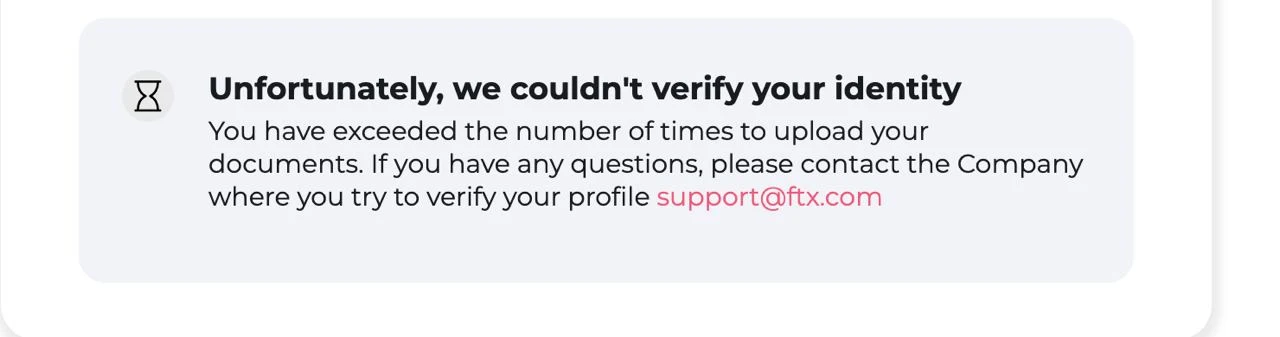
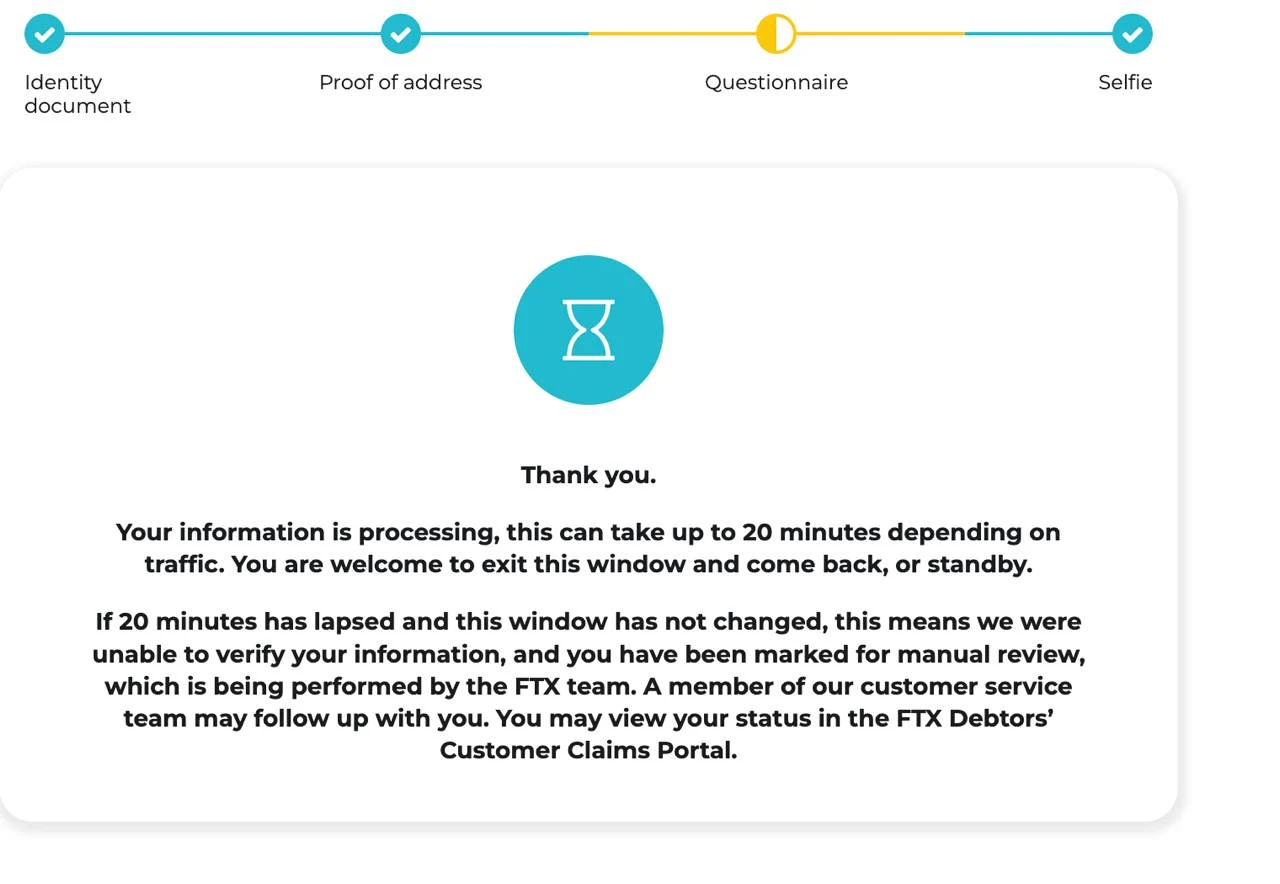
When I went back in February this year, just after the first payments had gone out, the identity check sent me to manual review, so my money comes in this round instead.
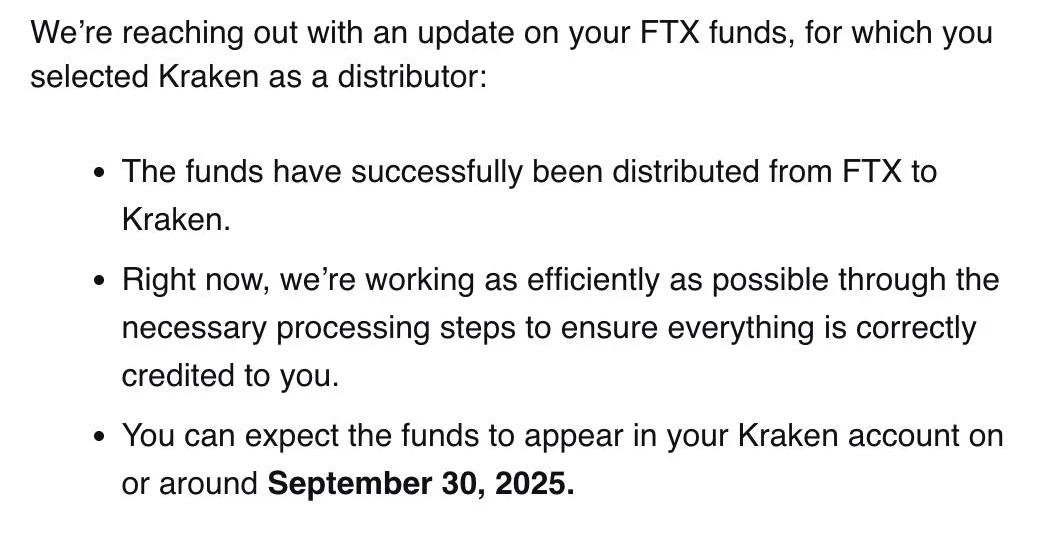
Tonight Kraken, which I chose to receive it, wrote to say the money had arrived from FTX.
By the standards of someone who held ETH, it is a different story. If N coins were frozen at a price Ppetition, the payout is a fixed number of dollars, and what it buys today is
where i is whatever is paid on top of the claim. For me, i is 0.2. ETH is trading at about $4,480 [4], so
A 120% recovery in dollars is a 34% recovery in ETH, for someone who held ETH for years. Creditors outside the convenience class, who have received 78% so far, are at about 22%. Even the people paid in February, when ETH was around $2,670, got back only a little over half of their coins.
A short you didn’t choose
The way I’ve come to see it: a customer who held ETH on the exchange was long ETH. Freezing the claim in dollars at the petition date is the same as selling the ETH at that day’s price and holding cash, at nine percent, until the estate paid. Every creditor who wanted to keep their exposure was, in effect, forced to sell at the low. If ETH had kept falling, the dollar claim would have been a gift. It went up instead, more than threefold, and the people who held coins on FTX, who were by definition long, are the ones who missed the move. A law professor made the same point last year: 118% “isn’t nearly as good as getting 300%” [5].
The estate’s own explanation is fair. FTX did not have enough of the coins on the day it failed to give them back, so an in-kind distribution was, in the creditors’ committee’s words, “inherently impracticable and inequitable” [3]. You cannot promise to deliver coins you don’t have: if the coin doubles, an in-kind promise doubles the hole. A dollar claim at the petition date is fixed and treats every creditor alike, whatever they held. It is the only way to share out a loss that is already known.
The same pattern, this month
On 7 September, Nemo, a yield protocol on Sui where I had put my SUI less than two weeks earlier, was exploited for about $2.59 million. A function meant for internal use had been left public, in code added after the audit [6]. Last week the team published its plan for users: whatever remains in the pools can be withdrawn, and the loss is covered by a new token, NEOM, a debt “equal to their loss in USD”, measured from a snapshot at the moment the protocol was paused [7] [8].
It is the FTX structure again, on a small scale and without a court. The SUI that was stolen from me has been converted into a dollar claim at that day’s price. Since then SUI has risen about 8%, so at face value a dollar of NEOM already buys back fewer coins than were lost; if SUI rallies, it will buy back fewer still. And the claim isn’t on an estate under a judge’s supervision. It is on the recovered funds and the future of the team that was hacked, and it carries no interest.
The counterexample
Not every recovery works this way. Mt. Gox, the exchange that failed in 2014, began repaying its creditors in bitcoin and bitcoin cash in July last year, ten years later [9]. Its creditors waited a decade, but they waited in the coin they had held, and over that decade bitcoin went up many times over. I don’t think anyone would choose a ten-year wait. But it shows the choice of unit is a choice, and it decides who keeps the upside.
What I’m keeping
First, read “100% recovery” as a question: 100% of what, at what price? A full recovery in dollars at the crash price is a full recovery in dollars, not in the coin you held.
Second, any custodian’s failure turns my coins into a dollar claim at the worst possible moment. Holding a coin on an exchange or in a protocol isn’t only the risk of losing it; it is also the risk of being forcibly sold at the bottom.
Third, the coins I want to hold for years belong in my own wallet, staked natively if anywhere. The things I deposit in protocols should be things I would be content to see converted to dollars on the day the protocol fails.
References
- FTX Recovery Trust. FTX Recovery Trust to distribute approximately $1.6 billion to creditors in third distribution on September 30, 2025. PR Newswire, 19 September 2025. prnewswire.com.
- In re FTX Trading Ltd., Case No. 22-11068 (JTD), Bankr. D. Del. Digital Assets Conversion Table, D.I. 5202-2, 27 December 2023. PDF.
- Official Committee of Unsecured Creditors of FTX Trading Ltd. Letter in support of the plan, 27 June 2024. epiq11.com.
- CoinGecko. Ethereum historical data, 20 September 2025. coingecko.com.
- Adam Levitin. FTX bankruptcy plan: what's with the consensus interest rate? Credit Slips, 8 May 2024. creditslips.org.
- Nemo. Nemo security incident: cause, process and fund tracing report, v1.1. September 2025. notion.site.
- Nemo. User asset recovery and $NEOM debt token program, v1.0. 14 September 2025. notion.site.
- Grace Abidemi. Nemo Protocol to issue debt token to compensate $2.6M hack victims. crypto.news, 15 September 2025. crypto.news.
- Mt. Gox Rehabilitation Trustee. Announcement regarding repayments, 5 July 2024. mtgox.com.